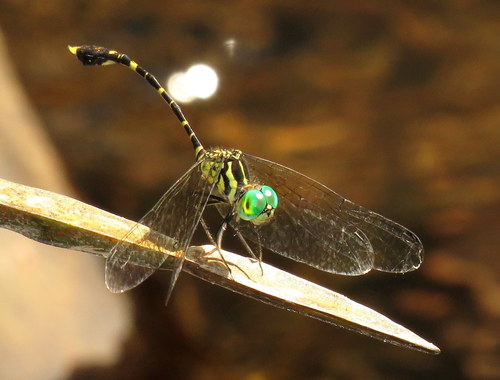
Common Archtail
Nannophlebia risi
Meet Australia’s stream-side acrobat, the Common Archtail. With its strikingly curved abdomen and vivid yellow-and-black armor, this small but mighty dragonfly is a master of the air across the continent's waterways.
Quick Identification
Size
Length: 25–30 mm (1.0–1.2 in); Wingspan: 45–55 mm (1.8–2.2 in)
Colors
Deep black or dark brown body with bright yellow bands and spots; clear wings; males have more pronounced abdominal arching
Key Features
- Distinctive upwardly arched abdomen in males
- Yellow and black 'wasp-like' patterning
- Large emerald-green compound eyes
- Small, delicate build with clear wings
When You’ll See Them
Geographic range
Where Does the Common Archtail Live?
The Common Archtail is an Australian icon, found across the northern and eastern reaches of the continent. Its territory stretches from the tropical tip of the Cape York Peninsula through the coastal regions of Queensland and New South Wales, reaching into eastern Victoria. It is also found in the northern parts of the Northern Territory and the Kimberley region of Western Australia, following the vital river systems that define these landscapes.
Basemap © OpenStreetMap contributors
Behavior
The Common Archtail is a diurnal hunter known for its 'sit-and-wait' predatory style. It spends much of its time perched on sunlit twigs, reeds, or rocks that overhang flowing water. From these vantage points, it keeps a keen eye out for small flying insects, launching rapid, agile aerial sorties to intercept prey before returning to its favorite perch. Its flight is characterized by quick, darting movements rather than sustained hovering.
In the social hierarchy of the creek, males are territorial and will often defend a specific stretch of water or a particularly sunny rock. They are most active during the heat of the day, using the sun's energy to power their flight muscles. When resting, they often hold their wings slightly forward and downward, a posture that helps distinguish them from other similar dragonfly families. Despite their predatory nature toward other insects, they are entirely harmless to humans and are excellent bio-indicators of healthy, flowing water systems.
EverydayEarth exclusive
Camera Tips
To capture the Common Archtail on camera, focus your efforts on 'perch points' along flowing water. Look for thin, dry twigs or reeds that stick out into the sunlight over a creek. These dragonflies are creatures of habit and will often return to the exact same landing spot after a flight. Set up your camera on a tripod at a height of about 0.5 to 1 metre (2-3 feet) and pre-focus on a likely branch. Using a macro lens or a telephoto with a short minimum focus distance is essential to capture the intricate yellow markings and the curve of the tail.
Since these insects are most active when it is warm, mid-morning to early afternoon is the prime time for photography. A high shutter speed (at least 1/1000s) is necessary to freeze their movement, as even while perched, they may twitch their wings or move their heads. If your camera has a 'pro-capture' or high-speed burst mode, use it to catch the moment they take off or land. Avoid using a flash if possible, as it can create harsh reflections on their transparent wings; natural, diffused sunlight is always best.
While you can't bait a dragonfly with food, you can 'engineer' a photo opportunity. If the natural perches are in bad light, try placing a slender, aesthetic stick in a well-lit patch near the water's edge. If it's the best vantage point in the area, an Archtail will likely claim it. Patience is key—wait for the dragonfly to become accustomed to the camera's presence, and you’ll find they are surprisingly tolerant of a slow-moving photographer.
Frequently Asked Questions
Record Common Archtail at your habitat
Connect a camera to start building your own species record — AI identifies every visitor automatically.