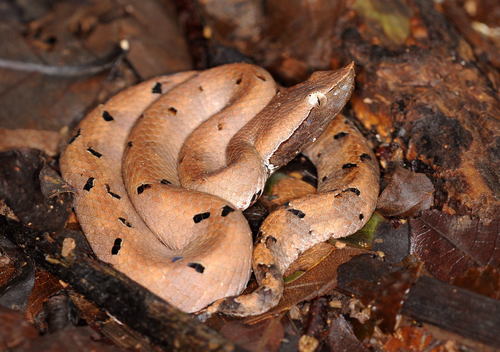
Hump-nosed Viper
Hypnale hypnale
A master of disguise within the leaf litter, the Hump-nosed Viper is one of South Asia's most intriguing small predators. Known for its unique upturned snout and incredible camouflage, this pit viper is a common but often unseen neighbor in the gardens and plantations of India and Sri Lanka.
Quick Identification
Size
30-45 cm (12-18 inches) in length; maximum recorded size is approximately 55 cm (22 inches).
Colors
Tan, grey, or reddish-brown ground color with two rows of dark, triangular spots that meet or alternate at the spine; belly is typically yellowish or brownish with dark mottling.
Key Features
- Distinctly upturned snout tipped with a small hump
- Broad, triangular head significantly wider than the neck
- Stocky, short body with a thin tail
When You’ll See Them
Geographic range
Where Does the Hump-nosed Viper Live?
The Hump-nosed Viper is a specialized resident of South Asia, found natively in only two countries: India and Sri Lanka. In India, it is a hallmark species of the Western Ghats, a biodiversity hotspot stretching across the states of Maharashtra, Karnataka, Goa, Kerala, and Tamil Nadu. In Sri Lanka, it is one of the most widely distributed venomous snakes, occupying various altitudes from the humid lowlands to the central hilly regions, thriving in both natural jungles and human-modified landscapes like home gardens.
Basemap © OpenStreetMap contributors
Behavior
The Hump-nosed Viper is a master of camouflage, spending much of its day perfectly still among fallen leaves or under low-hanging vegetation. It is a classic ambush predator, relying on its cryptic patterns to remain invisible to both prey and predators. When threatened, it doesn't always retreat; instead, it may vibrate its tail tip against dry leaves to create a buzzing sound and strike with surprising speed if a person or animal gets too close.
Primarily active during the twilight hours and throughout the night, this species is solitary and terrestrial. While it is venomous and medically significant, it is not naturally aggressive. Most human encounters occur in agricultural settings like tea or rubber plantations, where the snake’s habit of staying motionless in leaf litter leads to accidental contact. In the backyard setting, they are quiet residents that play a vital role in controlling populations of small rodents and lizards.
EverydayEarth exclusive
Camera Tips
To capture the Hump-nosed Viper on a trail camera, you must focus on the ground level. These snakes are small and strictly terrestrial, so mounting your camera just 5 to 10 inches above the ground is essential. Angle the lens slightly downward to cover a patch of leaf litter or a natural corridor between rocks or tree roots. Because of their small size, a camera with a short minimum focal distance or macro capability will provide much clearer images than a standard long-range trail cam.
Look for 'micro-habitats' where they are likely to hunt. Areas near backyard ponds, damp woodpiles, or the edges of garden paths where frogs and lizards congregate are prime locations. While you cannot easily bait a viper, you can 'bait' its prey; creating a habitat that attracts skinks or frogs will naturally draw the Hump-nosed Viper into your camera's field of view. They are very sedentary, so you might find one staying in the same square meter for several days while it waits for a meal.
Since they are most active at night and during the high-humidity periods of the monsoon, use a camera with 'No-Glow' infrared LEDs. Standard 'Low-Glow' or white flashes might startle the snake or its prey, ending the encounter prematurely. Set your trigger sensitivity to 'High' and use a burst mode (3-5 photos) or short video clips. Because they move slowly until they strike, video often provides the most fascinating look at their tongue-flicking and stalking behaviors.
Frequently Asked Questions
Record Hump-nosed Viper at your habitat
Connect a camera to start building your own species record — AI identifies every visitor automatically.