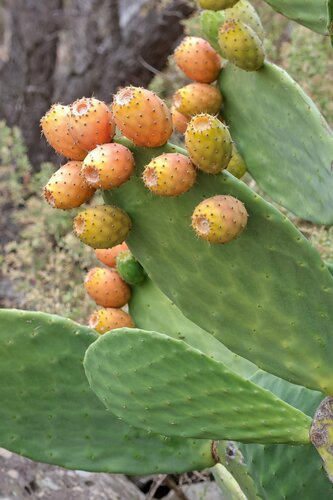
Indian fig opuntia
Opuntia ficus-indica
Known as the king of the cacti, the Indian fig opuntia is a multi-purpose marvel that provides sweet fruit, stunning blooms, and essential habitat for desert-dwelling wildlife.
Quick Identification
Size
Height typically 3-5 meters (10-16.5 feet); individual pads 25-50 centimeters (10-20 inches) long
Colors
Dull grayish-green pads; flowers are bright yellow, orange, or red; fruits range from pale green to vibrant magenta or yellow
Key Features
- Large, flattened oval-shaped succulent pads (cladodes)
- Tiny, irritating hair-like bristles called glochids
- Vibrant, cup-shaped flowers with many petals
- Fleshy, egg-shaped edible fruit known as tunas
When You’ll See Them
Geographic range
Where Does the Indian fig opuntia Live?
Originally native to the central plateau of Mexico, the Indian fig opuntia has become the most widely distributed cactus in the world thanks to human cultivation. It thrives across the Mediterranean Basin, North Africa, and the Middle East, where it is often grown for its delicious fruit. In the Western Hemisphere, it is commonly found naturalized throughout the southern United States, Central America, and South America, particularly in regions with mild winters and well-draining soil.
Basemap © OpenStreetMap contributors
Behavior
The Indian fig opuntia is a master of survival in harsh, arid environments, utilizing a specialized form of photosynthesis known as Crassulacean Acid Metabolism (CAM). This allows the plant to keep its pores (stomata) closed during the scorching day to prevent water loss, opening them only at night to take in carbon dioxide. Unlike many plants, it grows in segmented sections; if a pad breaks off and falls to the ground, it can quickly sprout new roots, allowing the cactus to clone itself and expand its territory without seeds.
In the backyard ecosystem, this cactus acts as a vital resource hub. During the spring, its massive blooms provide a nectar feast for native bees and hummingbirds. As the fruit ripens in late summer, it becomes a crucial moisture and sugar source for a wide variety of wildlife. Beyond food, the dense, prickly structure of a mature Indian fig opuntia offers an impenetrable fortress for nesting birds, such as cactus wrens, protecting them from ground-level predators.
EverydayEarth exclusive
Camera Tips
To capture the fascinating life of the Indian fig opuntia, prioritize time-lapse settings over standard motion detection. By setting your camera to take a photo every 20 minutes during the daylight hours in late spring, you can create a stunning sequence of the large flowers unfurling in the morning sun and wilting by dusk. Position your camera on a stable tripod approximately 3 to 5 feet away from a cluster of healthy buds for the best detail.
If you want to film the animals that use the plant, aim your camera at the ripe fruit (the 'tunas') located at the very top or edges of the pads. This is where the action happens. Small mammals, such as desert cottontails or squirrels, and birds like thrashers and woodpeckers, will visit these fruits frequently. Because these visitors are most active during the 'golden hours,' ensure your camera is positioned so the rising or setting sun doesn't shine directly into the lens, which can cause lens flare and overexposure.
For those interested in the 'micro-wildlife,' the flat surfaces of the pads are often home to cochineal insects—small, white, fluffy-looking scales. A camera with a good macro mode or close-focus capability can capture the intricate dance of ladybugs or lacewings that hunt these pests. When placing your camera near the cactus, be extremely careful of the glochids (tiny bristles); they are easily dislodged by wind or contact and can cause significant skin irritation. Use a long-handled tool or wear thick gloves when adjusting your camera's position.
Frequently Asked Questions
Record Indian fig opuntia at your habitat
Connect a camera to start building your own species record — AI identifies every visitor automatically.