Green Keelback
Rhabdophis plumbicolor
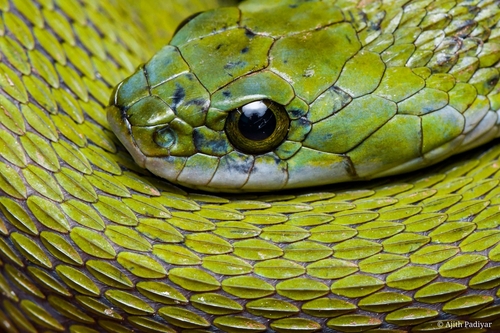
Meet the 'Toad-Eater' of the garden—a gentle, grass-green snake known for its docile nature and unique ridged scales. Often found near backyard ponds, the Green Keelback is a master of camouflage and a fascinating neighbor for any wildlife enthusiast.
Quick Identification
Size
45-60 cm (18-24 inches) on average, though large specimens can reach up to 90 cm (35 inches).
Colors
Uniform grass-green or dull olive-green above; creamy white or pale yellow belly. Juveniles feature a bold, black inverted 'V' on the neck.
Key Features
- Stout, toad-like body with a broad head
- Heavily keeled (ridged) scales giving a rough texture
- Large eyes with round pupils and a gentle expression
- Distinctive black 'V' or chevron on the nape (more prominent in juveniles)
When You’ll See Them
Geographic range
Where Does the Green Keelback Live?
The Green Keelback is a quintessential resident of the Indian subcontinent, thriving across the diverse landscapes of India and Sri Lanka. While its heartland lies in the central and southern regions of India, its range also extends westward into parts of Pakistan and eastward toward Myanmar. You will typically find it in areas where moisture is present, favoring the lush vegetation of the Western Ghats as well as suburban garden patches that offer plenty of amphibian prey.
Basemap © OpenStreetMap contributors
Behavior
The Green Keelback is one of the most docile and mild-tempered snakes you might encounter in a backyard setting. Unlike many of its faster, more high-strung relatives, this species is slow-moving and relies on its camouflage to stay hidden. When it feels threatened, rather than striking, it typically flattens its body against the ground to appear larger—a behavior often called 'mock-hooding.' It is so reluctant to bite that it is frequently handled by researchers with minimal protective gear, though it should always be treated with respect.
This species is primarily diurnal, meaning it is active during the day. It spends its time foraging through leaf litter or low vegetation. Interestingly, it has a specialized relationship with its prey; it is one of the few predators capable of eating poisonous toads without ill effects. Because of this diet, the Green Keelback is often found near permanent or semi-permanent water sources where amphibians congregate, making it a common visitor to garden ponds and damp irrigation ditches.
EverydayEarth exclusive
Camera Tips
To capture high-quality footage of a Green Keelback, camera placement is everything. Because these snakes are terrestrial and relatively slow-moving, you should position your AI camera as low to the ground as possible—ideally just 2 to 4 inches above the surface. Focus your lens on 'natural highways' like the edge where a stone wall meets a garden bed, or along the damp perimeter of a backyard pond. These snakes love high-contrast areas where they can easily slip into cover if a predator appears.
Since Green Keelbacks are diurnal, ensure your camera is set to its highest resolution during daylight hours. Unlike fast-moving mammals, keelbacks move with a deliberate, rhythmic crawl, so a standard trigger speed is usually sufficient. However, setting your camera to 'Video Mode' or a 'Burst Photo' mode is highly recommended. This allows you to see the unique way they flatten their bodies and flick their tongues, which helps in confirming identification through the ridged, keeled scales that give them their name.
The best 'lure' for a Green Keelback is a healthy ecosystem. They aren't attracted to traditional baits, but they will frequent areas with high amphibian activity. If you have a garden pond or a pile of damp logs that attracts toads, that is exactly where you should point your camera. During the monsoon season, when toads are most active, your chances of a sighting increase significantly. Look for them during the cooler morning hours when they emerge to bask and thermoregulate before they begin their daily hunt.
Similar Species
Species that look similar or are commonly confused with Green Keelback.
Frequently Asked Questions
Record Green Keelback at your habitat
Connect a camera to start building your own species record — AI identifies every visitor automatically.