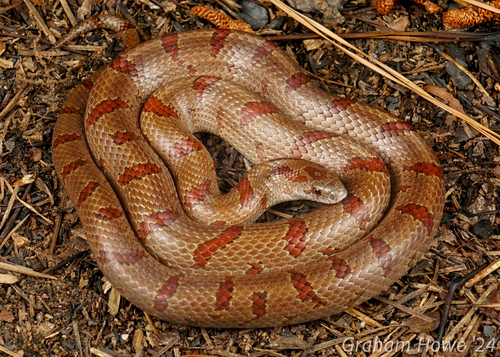
Mole Kingsnake
Lampropeltis rhombomaculata
A hidden gem of the Southeast, the Mole Kingsnake is a glossy, subterranean hunter that keeps local rodent populations in check. Though they spend most of their time underground, these beautiful constrictors are a prized find for backyard observers.
Quick Identification
Size
30-40 inches (76-102 cm) in length, occasionally reaching 45 inches (114 cm)
Colors
Light brown, gray, or reddish-brown base with chocolate-brown or reddish elliptical blotches; older adults may darken to a uniform brown
Key Features
- Smooth, glossy scales with a polished sheen
- Muscular, cylindrical body with a small head barely wider than the neck
- 40-55 dark brown elliptical spots along the back
- White or yellowish belly with irregular dark square markings
When You’ll See Them
Geographic range
Where Does the Mole Kingsnake Live?
Native to the Southeastern United States, the Mole Kingsnake is primarily found within the Atlantic Coastal Plain and Piedmont regions. Its range begins in the north around the Baltimore area of Maryland and extends south through Virginia and the Carolinas into the Florida Panhandle. Moving westward, they can be found across Georgia and into parts of Mississippi and Tennessee, though they are generally absent from the higher elevations of the Appalachian Mountains.
Basemap © OpenStreetMap contributors
Behavior
The Mole Kingsnake is one of the most secretive and elusive reptiles in North America. As its name implies, it is a fossorial species, meaning it spends the vast majority of its life underground in self-constructed burrows or taking over the tunnels of rodents. Because of this subterranean lifestyle, humans rarely encounter them in the open, and they are most often spotted during the night or immediately following heavy rainstorms when they are forced to the surface.
When encountered, Mole Kingsnakes are generally docile and non-aggressive. They are powerful constrictors that hunt by overpowering their prey and squeezing it until it can be swallowed whole. Like many other kingsnakes, they may vibrate their tails against dry leaves to produce a rattling sound if they feel threatened, a clever defense mechanism meant to mimic a rattlesnake and ward off potential predators.
EverydayEarth exclusive
Camera Tips
Capturing a Mole Kingsnake on a backyard or trail camera is a significant achievement for any wildlife enthusiast because of their subterranean nature. To increase your odds, place your camera near 'edges'—where your lawn meets a wooded area, along the base of a stone wall, or near old stump holes. These snakes often travel along physical barriers, so mounting your camera just 2 to 4 inches off the ground, aimed parallel to a wall or log, is the most effective way to catch them in transit.
Since these snakes are crepuscular and nocturnal, ensure your camera has a high-quality infrared sensor that won't overexpose the reflective, glossy scales of the snake at close range. They are most likely to emerge during periods of high humidity. The absolute best time to have your camera active is on a warm night immediately following a heavy summer rainstorm, as the moisture often drives them out of their flooded burrows and into the open to hunt.
For the best identification footage, use 'Video Mode' or 'Burst' photo settings. Because their brown-on-brown patterns can blend in with leaf litter, a still photo might look like a simple stick, but the fluid movement captured in a video will reveal the snake's muscular build and the characteristic chocolate-colored elliptical spots. Avoid using high-intensity flashes, which can startle the animal; instead, rely on low-glow infrared to observe their natural foraging behavior without interference.
Similar Species
Species that look similar or are commonly confused with Mole Kingsnake.
Frequently Asked Questions
Record Mole Kingsnake at your habitat
Connect a camera to start building your own species record — AI identifies every visitor automatically.