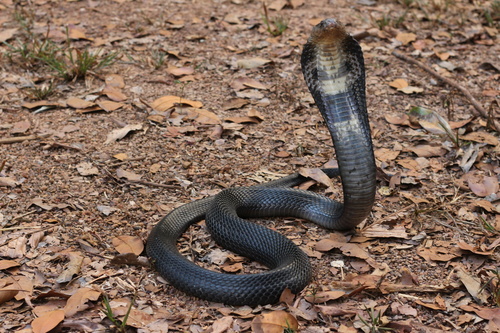
Monocellate Cobra
Naja kaouthia
The Monocellate Cobra is an iconic symbol of Asian wildlife, famous for the single 'eye' on its hood and its incredible ability to thrive alongside human neighbors.
Quick Identification
Size
Typically 1.3 to 1.5 metres (4.3 to 4.9 feet), though exceptional individuals can reach 2.3 metres (7.5 feet).
Colors
Variable from light beige and olive to dark brown or charcoal black; distinctive white or yellow monocle-shaped circle on the rear of the hood.
Key Features
- O-shaped 'monocle' mark on the rear of the hood
- Dilatable neck hood used in defensive displays
- Large, dark eyes with round pupils
- Smooth scales with a slight gloss
When You’ll See Them
Geographic range
Where Does the Monocellate Cobra Live?
The Monocellate Cobra is native to the lush and varied landscapes of South and Southeast Asia. Its expansive range stretches from the northern regions of India and Nepal, through the Indochinese Peninsula including Myanmar, Thailand, and Vietnam, and reaches into southwestern China. It is particularly common in the lowlands of Thailand and Bangladesh, where it has successfully adapted to human-modified environments like plantations and suburban fringes.
Basemap © OpenStreetMap contributors
Behavior
The Monocellate Cobra is a highly adaptable elapid known for its iconic defensive display. When threatened, it raises the anterior third of its body and spreads its neck ribs to form a wide hood, revealing the striking 'eye' pattern on the back. While it prefers to flee from human contact, it is a formidable defender and may hiss loudly or strike if cornered. Interestingly, some populations in the eastern part of its range have developed the ability to spit venom as a deterrent, though this is less common than in dedicated spitting cobra species.
Primarily terrestrial, this snake is a proficient hunter that utilizes a 'search and strike' strategy. It is active both during the day and at night, although it tends toward nocturnal behavior in areas with high human density to avoid detection. Despite its fearsome reputation, it plays a vital ecological role by keeping rodent populations in check near agricultural sites and suburban neighborhoods.
EverydayEarth exclusive
Camera Tips
To capture a Monocellate Cobra on a backyard camera, placement is everything. These snakes are terrestrial and often follow structural lines; set your camera low to the ground—about 15 to 30 centimeters (6 to 12 inches) high—facing along a fence line, the edge of a garden wall, or a known 'rat run.' Cobras are creature of habit and will often use the same paths to navigate through a suburban yard.
Since these snakes are frequently active during the twilight hours and at night, a camera with high-quality infrared (No-Glow) LEDs is essential. This allows you to capture their natural behavior without the startling flash of white light, which might cause the snake to flee or enter a defensive posture. Ensure your camera has a fast trigger speed (0.3 seconds or less), as cobras can move surprisingly quickly when they aren't in their hooded 'stand-off' pose.
Safety is paramount when monitoring venomous species. Never attempt to 'bait' a cobra with food, as this can create a dangerous association between humans and meals. Instead, focus on natural attractants: a small, shallow water feature or a brush pile that attracts the rodents they hunt will naturally draw the snake into your camera's field of view. Always maintain a safe distance when servicing your camera equipment in known cobra habitats.
Similar Species
Species that look similar or are commonly confused with Monocellate Cobra.
Frequently Asked Questions
Record Monocellate Cobra at your habitat
Connect a camera to start building your own species record — AI identifies every visitor automatically.