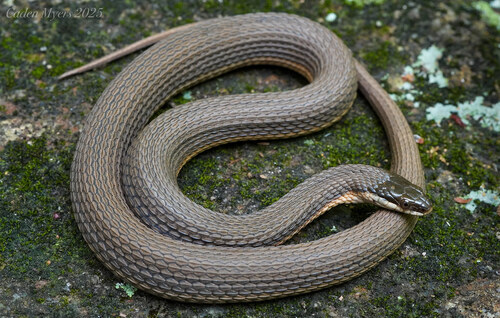
Queensnake
Regina septemvittata
A specialist of clean, rocky streams, the Queensnake is a slender reptile known for its unique 'soft-shell' crayfish diet and striking striped belly. Spotting one is a sure sign of a healthy aquatic ecosystem in your neighborhood.
Quick Identification
Size
15 to 24 inches (38 to 61 cm) in length; rarely exceeding 36 inches (91 cm). Slender, lightweight build.
Colors
Olive-brown or tan upper body with a yellow stripe along the lower sides. Cream or yellow belly marked with four distinct dark brown longitudinal stripes.
Key Features
- Four dark stripes running the length of the yellow belly
- Three faint dark stripes on the back (more visible in juveniles)
- Slender head barely wider than the neck
- Keeled scales giving a rough texture
When You’ll See Them
Geographic range
Where Does the Queensnake Live?
Native to the North American continent, the Queensnake is found throughout the eastern United States and parts of southern Ontario, Canada. Its core range stretches from the Great Lakes and the Delaware River Valley down through the Piedmont and Appalachian regions into the Gulf Coast states. While widespread across the East, their populations are often localized, limited strictly to watersheds that support healthy crayfish populations and high water quality.
Basemap © OpenStreetMap contributors
Behavior
The Queensnake is a shy, docile species that spends the vast majority of its time in or near the water. Unlike many other water snakes that can be aggressive when cornered, the Queensnake typically chooses flight over fight, quickly diving into the water or retreating into rocky crevices if disturbed. They are exceptionally gifted swimmers but are most often seen basking on low-hanging branches or flat rocks directly overhanging a stream.
These snakes are highly specialized hunters with a diet that consists almost entirely of freshly molted crayfish. Because soft-shelled crayfish are only available during certain times, the Queensnake’s activity and health are closely tied to the lifecycle of their prey. They are generally solitary, though multiple individuals may congregate in prime sunning spots or share communal hibernacula (overwintering dens) in rocky banks during the colder months.
EverydayEarth exclusive
Camera Tips
To capture high-quality footage of a Queensnake, your camera placement must be focused on the transition zone between water and land. Look for 'sunning logs' or flat rocks that extend over a stream. These snakes love to bask in the direct sun to regulate their body temperature, so position your camera at a low angle (about 6–12 inches off the ground) facing a prominent rock or branch that receives mid-morning sunlight.
Because Queensnakes are relatively small and move quickly, use a camera with a high-speed trigger and set it to record short video clips rather than still photos. This allows you to see the snake's distinctive swimming motion or its behavior as it tongue-flicks the air to 'smell' for nearby crayfish. A focal distance of 3–5 feet is ideal, as these snakes are wary of large objects and may avoid a camera placed too close to their favorite basking spot.
You don't need traditional bait for this species, as they only respond to live, molting prey. Instead, 'bait' your location by choosing a spot with high crayfish activity. Look for small mud chimneys or crayfish carapaces in the shallows. If your backyard includes a creek, clearing a small patch of overhanging brush to create a 'sun window' can naturally attract Queensnakes to a specific rock where you have pre-positioned your camera.
Seasonality is key for this species. In the Northern states, they are almost impossible to find from late October through April. The best time to activate your cameras is during the peak of summer when crayfish are most active and molting frequently. During these hot months, the snakes will be most active in the late morning when the sun first hits the water's edge.
Similar Species
Species that look similar or are commonly confused with Queensnake.
Frequently Asked Questions
Record Queensnake at your habitat
Connect a camera to start building your own species record — AI identifies every visitor automatically.