Red Arrow
Rhodothemis lieftincki
A flash of brilliant scarlet against the reeds, the Red Arrow is the ultimate garden pond sentinel. This master of flight is a favorite for backyard observers across Australia's coastal north and east.
Quick Identification
Size
Body length 40-45 mm (1.6-1.8 inches); Wingspan 60-75 mm (2.4-3.0 inches)
Colors
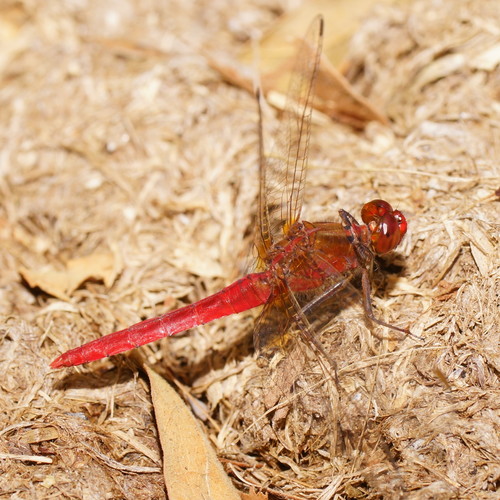
Mature males are a brilliant scarlet red throughout the body. Females and juveniles are golden-brown to yellowish with paler markings on the thorax.
Key Features
- Vibrant scarlet red abdomen in mature males
- Clear wings with a small yellowish tint at the base
- Broad, tapering abdomen
- Prominent perching habit on waterside vegetation
When You’ll See Them
Geographic range
Where Does the Red Arrow Live?
The Red Arrow is native to the Australasian region, where it is a familiar sight across the northern and eastern reaches of Australia. Its core territory forms a wide coastal arc stretching from Geraldton in Western Australia, across the tropical Top End, and down through Queensland to the Sydney basin in New South Wales. Beyond the Australian mainland, this species is also found in Papua New Guinea and the Solomon Islands, favoring lowland tropical and subtropical environments.
Basemap © OpenStreetMap contributors
Behavior
The Red Arrow is a classic 'percher' dragonfly, spending much of its day sitting on prominent twigs, reeds, or garden stakes near water. From these sunny vantage points, it keeps a keen eye out for both prey and rivals. It is highly territorial; a single male will often claim a specific patch of a pond and vigorously chase away any other red dragonflies that attempt to land nearby.
When hunting, the Red Arrow performs incredibly fast, acrobatic sorties. It launches into the air to snatch a flying insect with its legs and often returns to the exact same perch to consume its meal. These dragonflies are relatively bold and are less likely to be spooked by humans than other species, provided movements are slow and steady. They are most active during the heat of the day, using the sun's energy to power their high-metabolism flight.
EverydayEarth exclusive
Camera Tips
To capture the Red Arrow with an AI-powered backyard camera, focus your efforts on 'lookout' points rather than the water surface itself. These dragonflies are creatures of habit and will return to the same sun-drenched reed or stick dozens of times a day. Position your camera on a tripod or mount about 30 to 50 centimeters from a protruding plant or a bamboo stake you've placed near the water's edge. A side-on angle is ideal for showcasing the brilliant red length of the male's abdomen.
Lighting is your best friend when filming dragonflies. Because the Red Arrow is most active in direct sunlight, ensure your camera is positioned so the sun is behind it, illuminating the dragonfly's body. This will make the scarlet colors 'pop' against the green background and help the AI detection software distinguish the insect from its surroundings. If your camera allows for manual focus or macro settings, lock the focus on the tip of the perch where the dragonfly is most likely to land.
In a suburban backyard, you can 'bait' the Red Arrow by providing the perfect perch. Place a few slender dry sticks or bamboo stakes at various heights (roughly 0.5 to 1 meter above the water level) in the sunniest part of your pond. They prefer perches that give them a 360-degree view of their territory. For the best results, set your camera to a high frame rate or short-burst photo mode, as their takeoff and landing happens in the blink of an eye. Avoid placing the camera where it might be triggered by moving water or wind-blown leaves to save battery and storage.
Similar Species
Species that look similar or are commonly confused with Red Arrow.
Frequently Asked Questions
Record Red Arrow at your habitat
Connect a camera to start building your own species record — AI identifies every visitor automatically.