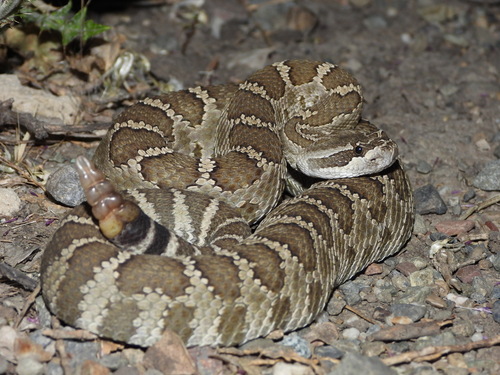
Western Rattlesnake
Crotalus oreganus
A master of the high-desert and coastal scrub, the Western Rattlesnake is a fascinating pit viper known for its iconic rattle and incredible patience. This shy predator is an essential part of the Western ecosystem, keeping rodent populations in check.
Quick Identification
Size
Adults typically measure 60 to 150 cm (24 to 60 inches) in length; weight generally ranges from 0.5 to 1.5 kg (1.1 to 3.3 lbs).
Colors
Base colors of olive-green, gray, or tan with a series of large, dark brown or black blotches along the back that have light-colored borders. The tail features dark rings ending in a tan or gray rattle.
Key Features
- Segmented keratin rattle at the end of the tail
- Large triangular head significantly wider than the neck
- Deep heat-sensing pits between the eyes and nostrils
- Dark diagonal stripe running from the eye to the corner of the mouth
When You’ll See Them
Geographic range
Where Does the Western Rattlesnake Live?
The Western Rattlesnake is a quintessential inhabitant of western North America. Its range extends from the southern interior of British Columbia in Canada, through the Pacific Northwest and Great Basin of the United States, and as far south as the Baja California Peninsula in Mexico. It is most frequently encountered in California, Oregon, Washington, and Idaho, occupying a vast array of landscapes from coastal sea level up to high mountain peaks.
Basemap © OpenStreetMap contributors
Behavior
The Western Rattlesnake is a patient, ambush-style predator that relies heavily on its exceptional camouflage to remain unseen by both prey and predators. While often feared, they are generally shy and reclusive, preferring to retreat or remain still rather than engage in conflict. The rattle is a defensive tool used only when the snake feels threatened, serving as an audible warning to keep larger animals away. They are highly efficient hunters, using their specialized heat-sensing pits to 'see' the infrared signatures of warm-blooded prey, even in total darkness.
Their daily activity is dictated by the thermometer. In the mild temperatures of spring and autumn, they are primarily diurnal, basking on rocks to soak up the sun's warmth. During the intense heat of summer, they shift to a crepuscular or nocturnal lifestyle, becoming most active during the cooler hours of dusk and dawn. In the winter, these snakes are known for their social hibernation habits, often gathering in large numbers in underground dens called hibernacula, sometimes shared with other snake species, to survive freezing temperatures.
EverydayEarth exclusive
Camera Tips
Capturing a Western Rattlesnake on a backyard camera requires a specialized approach due to their low-to-the-ground lifestyle and cold-blooded nature. Place your camera very low, ideally no more than 5 to 10 inches off the ground, and angle it slightly downward. Focus on 'pinch points' where a snake is likely to travel, such as the edge of a rock wall, the base of a fence line, or narrow gaps between garden features. These snakes prefer to move along edges where they feel less exposed to aerial predators like hawks.
One of the biggest challenges is triggering the camera. Standard Passive Infrared (PIR) sensors rely on detecting a difference in temperature between an object and the background. If a snake has been basking and matches the ground temperature, it might not trigger the sensor. To combat this, use a 'Time Lapse' mode set to take a photo every 1 to 2 minutes during the morning and evening. Alternatively, if your camera has an AI-detection mode specifically for reptiles or 'all motion' settings, ensure they are set to the highest sensitivity.
Natural attractants are better than artificial ones. If you have a dry yard, a very shallow water dish placed near cover can be a magnet for thirsty snakes. Similarly, areas with high rodent activity—like near a bird feeder where seeds drop—will naturally attract rattlesnakes looking for a meal. When checking your camera, always use a 'snake stick' or a long tool to clear the area around the device before reaching for it. Never place your hands where you cannot see, especially in rocky or brushy areas where a Western Rattlesnake might be resting in the shade.
Similar Species
Species that look similar or are commonly confused with Western Rattlesnake.
Frequently Asked Questions
Record Western Rattlesnake at your habitat
Connect a camera to start building your own species record — AI identifies every visitor automatically.