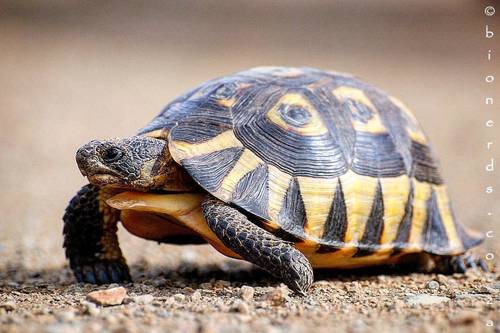
Angulate Tortoise
Chersina angulata
The Angulate Tortoise is the quintessential backyard reptile of the South African coast, famous for its 'bowsprit' shell and spirited personality. These resilient survivors bring a touch of ancient natural history to any garden they inhabit.
Quick Identification
Size
Carapace length 20–30 cm (8–12 inches); weight ranges from 0.5 to 2 kg (1.1–4.4 lbs)
Colors
Pale olive to bright yellow shell with dark, triangular patterns on the edges; males are typically larger and more elongated than females.
Key Features
- Single 'bowsprit' gular scute under the neck
- High-domed, oblong shell
- Black or dark brown centers on shell plates (scutes)
- Five claws on front feet and four on back feet
When You’ll See Them
Geographic range
Where Does the Angulate Tortoise Live?
Native to the southern tip of the African continent, the Angulate Tortoise is a staple of the South African landscape. Its core range spans the coastal regions of the Western Cape and Eastern Cape, extending northward into the southern reaches of Namibia. These tortoises are particularly well-adapted to the Mediterranean climate of the Cape, where they are frequently encountered in both wild fynbos and established suburban greenbelts.
Basemap © OpenStreetMap contributors
Behavior
The Angulate Tortoise is a hardy and active reptile, often observed foraging during the cooler parts of the day. Unlike many other tortoise species that have two throat shields, the Angulate is unique for its single 'gular' scute under the chin, which males use as a lever to flip rivals during territorial disputes. These 'jousting' matches are a common sight during the spring mating season, where males demonstrate surprising agility and persistence.
In a backyard setting, they are relatively bold and can become accustomed to human presence, though they will quickly retract their head and limbs into their shell if startled. They are solitary creatures but may congregate around food sources or water puddles after a rain. During the heat of the day or cold winter nights, they retreat into thick brush or shallow burrows to regulate their body temperature.
EverydayEarth exclusive
Camera Tips
To capture high-quality footage of an Angulate Tortoise, camera placement is everything. Since these tortoises stay low to the ground, your camera should be mounted no more than 15–20 cm (6–8 inches) off the ground. Aiming the lens slightly upward or level with the terrain will provide an intimate 'snail's eye view' of their facial features and the intricate patterns on their shell. Focus on 'tortoise highways'—narrow gaps in garden hedges or well-worn paths through the scrub where they frequently travel.
While we don't recommend feeding wildlife, you can naturally attract them to your camera's field of view by placing it near indigenous 'tortoise food' like *Mesembryanthemum* (vygies) or hibiscus flowers. They are also highly attracted to water during dry spells; a shallow, ground-level birdbath or a simple terracotta saucer filled with water is an irresistible lure for a thirsty tortoise and provides excellent opportunities for video of them drinking.
Lighting is crucial for capturing the vibrant yellows and deep blacks of their shell. Early morning and late afternoon sun provides a warm glow that avoids the harsh shadows of midday. If your camera has a time-lapse mode, use it! Watching a tortoise navigate a garden over several hours is fascinating. Ensure your trigger sensitivity is set to high, as their slow movement can sometimes fail to trigger less sensitive PIR sensors.
Similar Species
Species that look similar or are commonly confused with Angulate Tortoise.
Frequently Asked Questions
Record Angulate Tortoise at your habitat
Connect a camera to start building your own species record — AI identifies every visitor automatically.