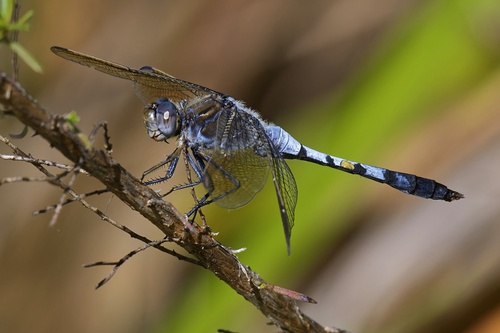
Blue Skimmer
Orthetrum caledonicum
The Blue Skimmer is Australia's most recognizable dragonfly, known for the brilliant powder-blue color that mature males wear like a suit of armor. A frequent visitor to backyard ponds, these master aerialists are as beneficial as they are beautiful.
Quick Identification
Size
Body length 40-45mm (1.6-1.8 in); wingspan 70-75mm (2.8-3.0 in)
Colors
Mature males feature a striking powder-blue (pruinose) abdomen and thorax; females and juveniles are greenish-yellow to sandy brown with dark markings.
Key Features
- Vibrant powder-blue coating on mature males
- Greenish-yellow face and thorax in younger individuals
- Clear wings with a small orange-brown spot at the base
- Frequent perching habit with wings spread flat and forward
When You’ll See Them
Geographic range
Where Does the Blue Skimmer Live?
The Blue Skimmer is a highly adaptable species primarily native to the Australian continent, where it is found in almost every region including Tasmania. Its core range spans from the tropical wetlands of the north to the temperate suburban gardens of the south and west. Beyond Australia, this hardy dragonfly is also commonly found in Papua New Guinea, New Caledonia, and parts of Indonesia, thriving wherever permanent or semi-permanent fresh water is available.
Basemap © OpenStreetMap contributors
Behavior
Blue Skimmers are classic 'perchers,' spending much of their day sitting on prominent twigs, reeds, or even garden stakes near water. From these vantage points, they survey their territory, darting out with incredible speed to intercept flying insects or to drive away competing males. They are highly territorial and will often return to the exact same perch after a brief hunting sortie or patrol flight.
These dragonflies are most active during the warmest parts of the day and are often seen basked in direct sunlight to regulate their body temperature. While they are agile and fast flyers, they are relatively approachable for observers who move slowly, making them one of the most rewarding insect species to watch in a backyard setting. They serve as excellent natural pest controllers, as their diet consists almost entirely of smaller flying insects.
EverydayEarth exclusive
Camera Tips
To capture the stunning blue hue of the male Blue Skimmer, placement is key. These dragonflies are creatures of habit and will almost always return to a favorite 'lookout' perch—usually a dry stick, a reed, or even the tip of a garden hose near water. Position your camera on a tripod or fixed mount about 1.5 to 3 feet away from a prominent vertical or horizontal perch near a pond. Ensure the camera is at the same height as the perch for a professional 'eye-level' perspective.
Lighting is critical for bringing out the waxy, powder-blue texture of their bodies. These insects are 'sun-worshippers,' so aim your camera towards a spot that receives full sun between 10 AM and 2 PM. Avoid filming with the sun directly behind the subject to prevent silhouettes; instead, try to have the sun behind your camera or hitting the dragonfly from the side to emphasize the intricate wing venation and body color.
Since Blue Skimmers move with lightning speed, use a camera with a fast trigger speed or high-frame-rate video settings. If you are using a trail camera with AI detection, set it to the highest sensitivity. You can 'bait' them into your frame by placing a fresh, dry bamboo stake or a tall stick in an open, sunny spot near a water source. They are naturally drawn to the highest available perch to survey their domain, which makes their behavior highly predictable for a patient photographer.
Similar Species
Species that look similar or are commonly confused with Blue Skimmer.
Scarlet Percher
Almost identical in shape and perching behavior, but the male is bright red instead of powder-blue.
Common Glider
Features a broader, more triangular hindwing and spends more time gliding than the dart-and-perch style of the Blue Skimmer.
Palemouth
A similar blue dragonfly, but generally smaller with a distinctly pale, almost white face compared to the Blue Skimmer's greenish face.
Frequently Asked Questions
Record Blue Skimmer at your habitat
Connect a camera to start building your own species record — AI identifies every visitor automatically.