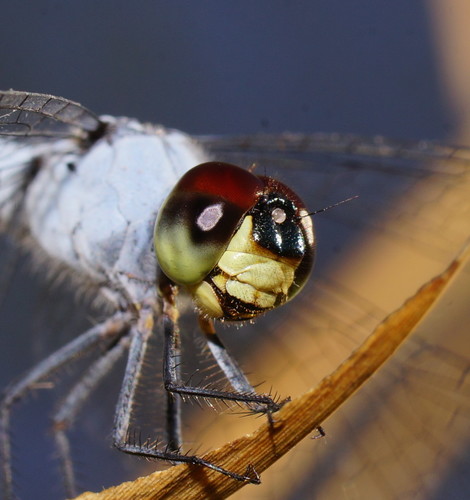
Palemouth
Brachydiplax denticauda
A small but striking dragonfly, the Palemouth is famous for the male's brilliant powdery blue abdomen and distinctive pale face.
Quick Identification
Size
Small dragonfly with a body length of 25–30 mm (1.0–1.2 in) and a wingspan of 45–55 mm (1.8–2.2 in)
Colors
Mature males are covered in a powdery light blue (pruinescence); females and juveniles are ochre or yellowish-brown with dark dorsal markings.
Key Features
- Pale creamy-white face and mouthparts
- Bright powdery-blue abdomen in mature males
- Dark wing spots (pterostigma) near the tips
- Small, dainty build compared to other blue skimmers
When You’ll See Them
Geographic range
Where Does the Palemouth Live?
The Palemouth is native to the tropical and subtropical regions of Oceania and Southeast Asia. Its primary range spans across northern and eastern Australia, specifically from the Kimberley region across the Top End to the coasts of Queensland and New South Wales. Beyond the Australian continent, it is commonly found throughout Indonesia, Papua New Guinea, and the Solomon Islands, where it thrives in lowland freshwater ecosystems.
Basemap © OpenStreetMap contributors
Behavior
The Palemouth is a highly active and territorial dragonfly often seen darting over the surface of still waters. Males are particularly conspicuous as they claim perches on reeds, twigs, or floating vegetation, aggressively defending their small patch of territory from other males. They utilize a 'perch and patrol' strategy, frequently returning to the same spot after a short flight to intercept prey or rivals.
These dragonflies are sun-lovers, reaching their peak activity during the hottest parts of the day. Unlike some larger, more nomadic species, the Palemouth tends to stay close to its natal water source. They are generally tolerant of human presence, making them excellent subjects for backyard observers who have established garden ponds or live near drainage lines.
EverydayEarth exclusive
Camera Tips
To capture high-quality images of the Palemouth with an AI-powered camera or a trail cam, positioning is everything. These dragonflies have preferred 'launching pads'—usually a vertical reed or a horizontal twig sticking out of the water. Spend a few minutes observing which stick the male returns to most often, and mount your camera on a tripod or bracket focused specifically on that perch. A distance of 1 to 2 feet is ideal if your camera has macro capabilities.
Lighting is your best friend when photographing the Palemouth. Because their blue color comes from 'pruinescence' (a waxy powder), they look most vibrant in direct, bright sunlight. Position your camera so the sun is behind you, illuminating the dragonfly's side or back. Avoid shadows, as the AI might struggle to distinguish the blue abdomen from dark backgrounds if the light is too dappled.
If you are using a trigger-based camera, set it to a 'burst' mode. Dragonflies are incredibly fast, and their wings move at speeds that can blur even at high shutter speeds. For video, high frame rates (60fps or higher) will allow you to see the intricate flight mechanics of the Palemouth in slow motion. If your backyard doesn't have a natural water feature, placing a simple birdbath with a few dry sticks protruding from the center can act as a natural lure for these territorial insects.
Similar Species
Species that look similar or are commonly confused with Palemouth.
Blue Skimmer
Much larger than the Palemouth and lacks the distinctive white mouthparts.
Chalky Percher
Has a more robust body and a different pattern of black markings on the tip of the abdomen.
Slender Skimmer
Features a much thinner abdomen and typically lacks the intense powdery blue coloration of the Palemouth.
Frequently Asked Questions
Record Palemouth at your habitat
Connect a camera to start building your own species record — AI identifies every visitor automatically.