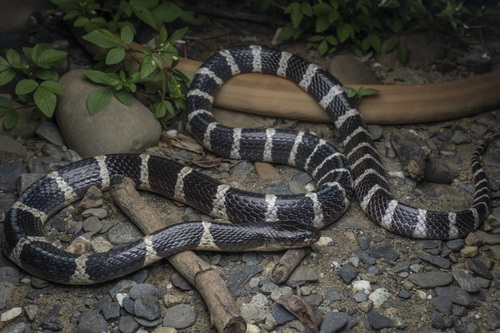
Many-banded Krait
Bungarus multicinctus
A striking monochrome predator of the night, the many-banded krait is one of Asia's most venomous yet elusive serpents. Its beautiful black-and-white scales are a hallmark of the marshy lowlands it calls home.
Quick Identification
Size
1 to 1.5 metres (3.3 to 4.9 feet) on average; maximum recorded length of 1.85 metres (6 feet)
Colors
Glossy black or bluish-black body with 21–50 distinct white cross-bands; ventral side is typically white or creamy
Key Features
- Striking white bands narrower than the black segments
- Triangular body cross-section with a ridged spine
- Small, dark eyes that blend into a solid black head
- Smooth, glossy scales that shimmer under light
When You’ll See Them
Geographic range
Where Does the Many-banded Krait Live?
Native to the eastern and southeastern regions of Asia, the many-banded krait thrives across central and southern China and the island of Taiwan. Its territory extends southward into the mainland Southeast Asian countries of Vietnam, Laos, and eastern Myanmar. It is a lowland specialist, favoring the humid, water-rich environments found throughout these subtropical and tropical zones.
Basemap © OpenStreetMap contributors
Behavior
The many-banded krait is a primarily nocturnal species, emerging after dusk to hunt along the edges of water. During the day, it is remarkably shy and reclusive, often hiding in abandoned rodent burrows, under rock piles, or within thick leaf litter. While it possesses one of the most potent neurotoxic venoms of any land snake, it is generally considered non-aggressive during daylight hours, often tucking its head beneath its body coils if disturbed.
At night, the krait’s temperament shifts slightly as it becomes more active and alert. It is an excellent swimmer and is frequently observed navigating through shallow water or damp vegetation. Despite its proximity to human agricultural areas like rice paddies, it tends to avoid direct conflict with people, though it may strike defensively if stepped on or accidentally handled in the dark.
EverydayEarth exclusive
Camera Tips
To successfully capture the many-banded krait on a backyard or trail camera, focus your placement on 'travel corridors' near water. The edges of garden ponds, drainage culverts, or even the damp transition zone between a lawn and a wooded area are ideal. Because these snakes hug the ground and have a relatively low profile, mount your camera very low—ideally only 10 to 15 centimetres (4 to 6 inches) off the ground—and angle it slightly downward to ensure the white banding is clearly visible for identification.
Since this species is strictly nocturnal, the quality of your camera's infrared (IR) flash is paramount. Use 'No-Glow' or 'Black' IR LEDs to prevent scaring off the snake or the amphibians it preys upon. High-resolution video mode is often better than still photos for this species, as it allows you to observe their distinctive, slow, undulating movement and the way they 'taste' the air with their tongues to track prey.
You can increase your chances of a sighting by managing your backyard habitat to attract their natural prey. A small, permanent water feature will draw in frogs and lizards, which are the krait's primary targets. Avoid using chemical pesticides that might reduce the population of these prey animals. During the warmer, humid months of the monsoon or wet season, krait activity peaks, making this the best time to keep your cameras running 24/7.
Safety should be your first priority when maintaining cameras in krait habitat. These snakes are highly venomous and can be difficult to spot in low light. Always check your camera sites during broad daylight when the snakes are inactive. Wear thick, protective boots and use a reach-tool or a long stick to clear any tall grass around your camera before approaching it. Never reach into dark crevices or under logs near your camera setup with bare hands.
Similar Species
Species that look similar or are commonly confused with Many-banded Krait.
Frequently Asked Questions
Record Many-banded Krait at your habitat
Connect a camera to start building your own species record — AI identifies every visitor automatically.