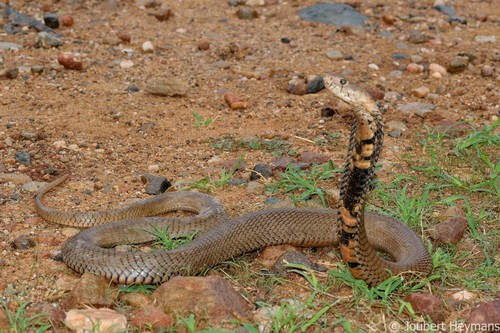
Mozambique Spitting Cobra
Naja mossambica
The Mozambique Spitting Cobra is one of Africa's most common and defensive elapids, famous for its 'sharpshooting' venom and its striking salmon-pink throat. A highly adaptable survivor, it is a master of suburban living and a key player in the African ecosystem.
Quick Identification
Size
90–120 cm (3–4 ft) on average, with maximum lengths reaching 150 cm (5 ft)
Colors
Slate-grey, olive-grey, or tawny brown upper body; salmon-pink to orange-yellow belly with distinct black cross-bars on the neck
Key Features
- Salmon-pink or orange throat with black cross-bars
- Scales usually have black edges
- Small, tear-shaped head slightly distinct from neck
- Capable of spitting venom up to 3 meters (10 feet)
When You’ll See Them
Geographic range
Where Does the Mozambique Spitting Cobra Live?
Native to the southern half of the African continent, the Mozambique Spitting Cobra thrives across a vast subtropical landscape. Its core range spans from the savannas of South Africa and Namibia up through the woodlands of Mozambique, Zimbabwe, and Zambia, reaching as far north as Tanzania and Malawi. This adaptable elapid is particularly common in the eastern regions of Southern Africa, where it has successfully integrated into human-modified environments and suburban neighborhoods.
Basemap © OpenStreetMap contributors
Behavior
The Mozambique Spitting Cobra is a highly nervous and alert species, widely considered one of the most dangerous snakes in Africa due to its defensive temperament. Unlike many other cobras that stand tall and spread a wide hood before acting, this species is known for its ability to spit venom from a low, concealed position without warning. It is famously accurate, aiming specifically for the eyes of a perceived threat to cause temporary or permanent blindness, allowing the snake to escape.
While primarily nocturnal, this cobra is frequently seen basking in the early morning or late afternoon. It is an active forager that often ventures into human settlements in search of prey. Interestingly, when cornered and unable to spit or bite, it may occasionally feign death (thanatosis), though this behavior is less common than in the Rinkhals. Despite its fearsome reputation, it generally prefers to avoid conflict unless it feels stepped on or trapped.
EverydayEarth exclusive
Camera Tips
To capture the Mozambique Spitting Cobra on camera, you should focus on low-level placement near potential transit corridors. These snakes often hug the edges of structures, so placing your camera along garden walls, the base of woodpiles, or near dense shrubbery is highly effective. Aim the lens about 10–15 centimeters (4–6 inches) off the ground to ensure you catch the snake's profile rather than just its back. Setting the camera near a backyard pond or a leaky outdoor tap is a top strategy, as they are frequently drawn to water to find toads.
Since this species is most active after dark, high-quality infrared (IR) night vision is the most important feature for your setup. Use a 'High' or 'Fast' trigger speed setting, as cobras can move surprisingly quickly when foraging. Avoid using cameras with a visible white-light flash, as the sudden burst can cause the snake to strike at the camera or flee before you get a clear shot. Time-lapse mode can also be effective if you know a particular rock or log is a popular basking spot in the early morning hours.
Safety is the most critical aspect of camera trapping this species. These cobras are capable of spitting venom with incredible accuracy through the mesh of a camera security box or while you are reaching to change an SD card. Always wear protective eyewear (like ballistic glasses or goggles) and long trousers when servicing cameras in their habitat. Before touching the camera, use a long stick to gently check the surrounding grass and the space behind the camera housing, as the snake may be using the equipment's shade as a hiding spot during the day.
Similar Species
Species that look similar or are commonly confused with Mozambique Spitting Cobra.
Frequently Asked Questions
Record Mozambique Spitting Cobra at your habitat
Connect a camera to start building your own species record — AI identifies every visitor automatically.