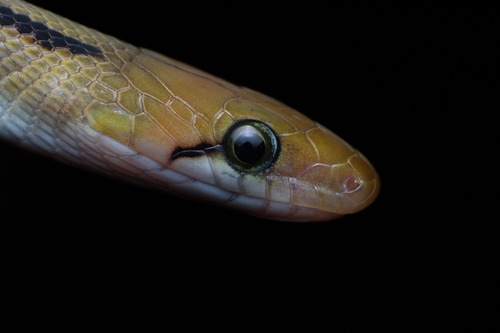
Trinket Snake
Coelognathus helena
An elegant and energetic resident of South Asian gardens, the Trinket Snake is a master of mimicry and a tireless hunter of garden pests. Known for its striking 'jeweled' patterns and dramatic defensive poses, it is one of the most rewarding reptiles to spot on a backyard camera.
Quick Identification
Size
Typically 70-150 cm (27-59 inches) in length; slender build
Colors
Light or chocolate brown body with dark crossbands containing white 'trinket' spots on the front; two black stripes on the tail
Key Features
- Two black parallel lines on the neck
- White jewel-like spots within dark bands on the forebody
- Two prominent black stripes running down the tail
- S-shaped defensive strike posture when threatened
When You’ll See Them
Geographic range
Where Does the Trinket Snake Live?
This adaptable reptile is native to the South Asian subcontinent, with its core populations found throughout India, Sri Lanka, and Bangladesh. It also thrives across parts of Pakistan and Nepal, favoring regions with a mix of cover and open hunting ground. Because it adapts well to human-modified landscapes, it is frequently spotted in rural farmlands and the leafy outskirts of major South Asian cities.
Basemap © OpenStreetMap contributors
Behavior
In a backyard setting, they are excellent 'pest control' officers. They use their keen sense of smell to track down rodents and small lizards, which they overpower using constriction. They are most active during the day, though in the peak of summer, they may shift their activity to the cooler dawn and twilight hours to avoid the midday heat.
EverydayEarth exclusive
Camera Tips
To capture a Trinket Snake on your backyard camera, focus on 'transition zones' where dense vegetation meets open pathways or garden edges. These snakes are active hunters and frequently travel along the base of walls, fences, or thick hedges. Position your camera low—no more than 5 to 10 inches off the ground—and angle it slightly downward to capture the full length of the snake as it glides by. Since they are ectothermic, you’ll often find them moving more frequently during the mid-morning as they warm up or in the late afternoon before the temperature drops.
While you shouldn't use food bait for snakes, you can attract them indirectly by maintaining a wildlife-friendly garden. Piles of leaf litter, stacked firewood, or a small rockery provide the perfect cover for the lizards and rodents that Trinket Snakes hunt. If you have a small water feature or ground-level birdbath, aim your camera nearby; these snakes are known to visit water sources to drink or hunt for frogs during the drier months.
For the best results, use a camera with a high-speed trigger and a wide-angle lens. Trinket Snakes can move surprisingly fast when they are on the hunt. Set your camera to 'burst mode' or high-definition video (15-20 seconds) to ensure you see the distinctive white 'trinket' markings and the black stripes on the tail, which are key for identification. During the monsoon season, look for them in elevated spots or near stone walls as they move to avoid waterlogged burrows.
Similar Species
Species that look similar or are commonly confused with Trinket Snake.
Frequently Asked Questions
Record Trinket Snake at your habitat
Connect a camera to start building your own species record — AI identifies every visitor automatically.